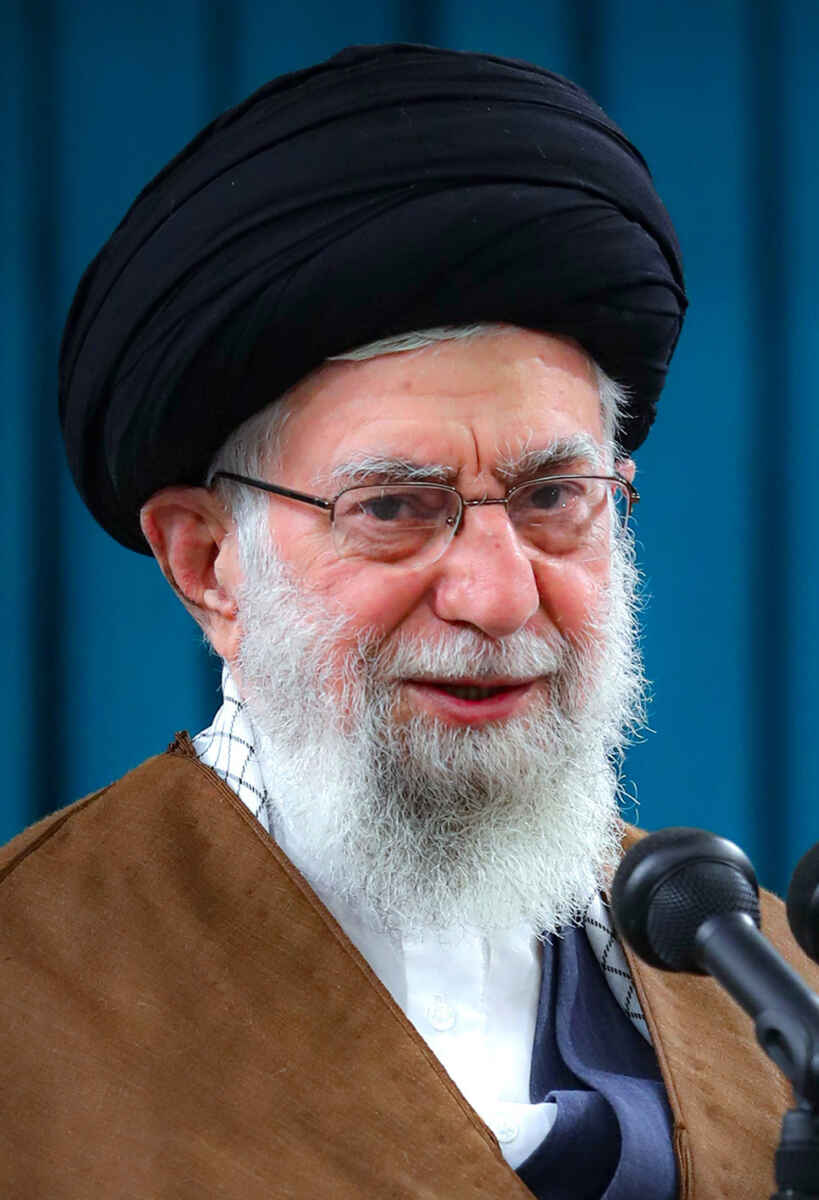
The Iranian Supreme Leader Ali Khamenei (German biography) has been rightly eliminated, as part of a total of 48 key Iranian figures, according to the count by US-President Trump, based on two separate interviews he gave on March 1. But Trump seems to have no plan for a democratic Iran.
According to some sources, Donald Trump has been talked into the attack mainly by Israel and Saudia Arabia. A reunion of key people on February 28 made them easy targets, which helped the decision making. The American president was clearly encouraged by the success of Operation Absolute Resolve against dictator Nicolás Maduro.
In the case of Venezuela, Trump just decapitated the leadership couple, but left the rest of the regime in place. He was mainly preoccupied with oil and gas and did not care aboout regime change although, in the case of Venezuela, he had the option of installing organized democratic leaders with broad popular support.
In the case of Iran, the opposition is divided, has been partly killed, imprisoned or driven into exile. Will Trump go for full regime change or will he follow the Venezuelian playbook? There is no unifying figure in sight, despite of the occasional mentioning of the late Shah’s eldest son, Reza Pahlavi (*1960), who left Iran as a young man in 1979, never to return. He has distinguished himself as a notorious playboy. In addition, he has said to be in favor of the establishment of a secular, democratic and liberal Iran.
However, Ruhollah Khomeini and his mullah regime came to power in 1979 because the Shah and his regime were deeply unpopular. Most Iranians want to close the chapter on both the Shah and the mullahs.
On March 1, 2026, the erratic President Trump announced that he expected the conflict to last around four weeks. So he still seems to have a lot planned. In addition to Ali Khamenei, other regime figures killed so far include the head of the National Defense Council, Ali Shamkhani, who attracted attention primarily because of a video that circulated in October 2025 showing his scantily clad daughter at wedding celebrations in April.
There was no sign of veils or hijabs. The father, a former defense minister and former commander of the Revolutionary Guard’s naval forces, did not seem to mind his daughter’s liberal lifestyle. In the past, the regime had cracked down brutally on private wedding celebrations and private parties where, for example, too much skin was shown. The hypocrisy of those in power, including Ali Shamkhani, who has now been murdered by the ongoing US and Israel military intervention, was obvious.
Other leading representatives of the regime who have been forced to bite the dust in recent days include the commander of the Iranian Revolutionary Guard (Pasdaran) Mohammad Pakpour, Defense Minister Aziz Nasirzadeh, Chief of Staff Sayyid Abdolrahim Mousavi, Intelligence Chief Salah Asadi, and others.
In less than three days, Israeli and American forces destroyed the headquarters of the Islamic Revolutionary Guard Corps, ballistic missile installations, Iranian missile launchers, air defense systems, government and military command centers. According to President Trump’s Truth Social post made on Sunday, March 1, the United States have already sunk nine Iranian warships and largely destroyed the headquarters of the Iranian fleet.
Since February 28, the U.S. and Israel have already hit over 2,000 targets in Iran. The (incomplete) list of killings and destructions is impressive, but it does not change the regime’s monopoly on violence (Gewaltmonopol). Will parts of the regular army, which are somewhat less under the control of the dictatorship, show solidarity with the protesters? Which Iranians does Trump want to work with?
The Revolutionary Guards are said to comprise around 400,000 armed men. It will be difficult to eliminate or decisively weaken them in four to five weeks—the possible duration of the war indicated by Trump in interviews on March 1. The US president is oscillating between regime change and a Venezuela solution, in which only the top of the regime is eliminated. Is he really thinking about establishing democracy in Iran? Even in the United States, he is working to undermine it.
Saudi Arabia, which according to some observers has been pushing for war against Iran alongside Israel, has just as little interest in a democratic Iran as Qatar, Bahrain, the United Arab Emirates, and other powers in the region, because this model could spread to them. Hope dies last. The Iranians deserve a chance.
As for the disruption of naval traffic through the Strait of Hormuz, the conduit for 20% of the world’s oil supply, together with 30% of global liquefied natural gas (LNG), it has to be mentioned that it is vital for Iran’s oil exports too. Roughly 90% of Iran’s oil exports go to China, and 90% of the Iranian oil exports go through the Strait of Hormuz. The Iranians are shooting themselves in the foot.
Further reading in French: Shah Mohammad Réza Pahlavi.
Persian sheet music. Beauty items at Amazon.com, Amazon.co.uk.
Photograph of Ali Khamenei, the Supreme Leader of the Islamic Republic of Iran. Cropped from a photo showing Iranian lamenters meet with the leader of the Islamic Republic of Iran on January 23, 2022. Source: https://farsi.khamenei.ir/photo-album?id=49438#i via Wikimedia. Creative Commons Attribution 4.0 International License.
Article added on March 2, 2026 at 16:00 Swiss time.


.jpeg)