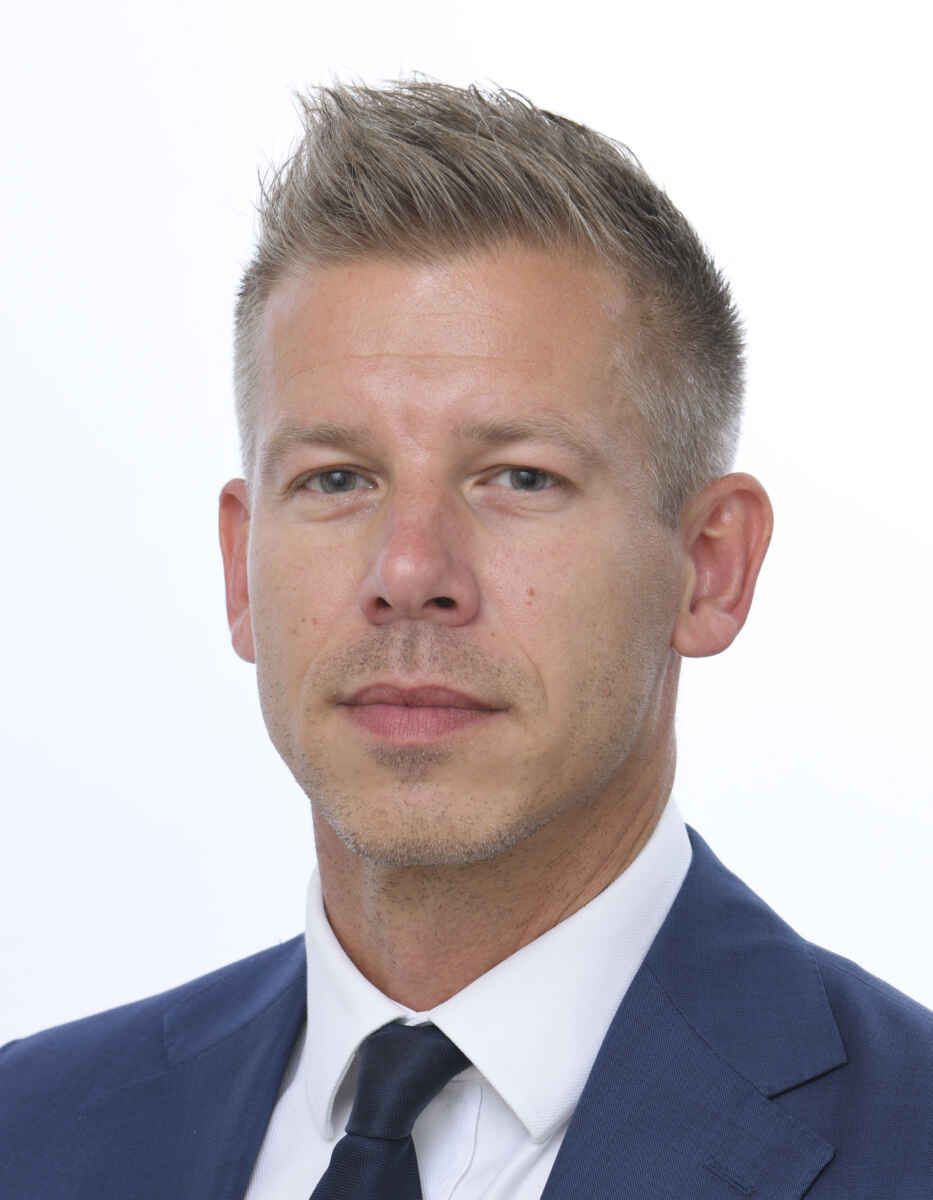
Bye, bye Orban! Péter Magyar (*1981) and his oppositional Tisza party win a two-thirds majority in the 2026 Hungarian parliamentary election—despite all of Viktor Orbán’s (*1963) repeated gerrymandering, the control of roughly 80% of the media in Hungary, and repeated election handouts to retirees and rural residents, who make up his core constituency.
On April 12, 2026 the turnout was 79.55%—a substantial increase of 9.96 percentage points in comparison with the 2022 election, in which Viktor Orbán and his Fidesz party had “won” a two-thirds majority in a free, but far from fair election.
In 2026, with 98.25% of the votes counted, in their first national election, the great communicator Péter Magyar and his Tisza party win 54.4% of the vote and 136 seats in the 199-seat parliament. Viktor Orbán’s Fidesz ends up with only 37.8% (a massive drop of -14.98 percentage points in comparison with 2022!). After sixteen uninterrupted years in power, his shady reign ended.
Only one other party made it over the 5%-threshold to enter parliament: László Toroczkai’s (*1978) far-right Our Homeland Movement (Mi Hazánk Mozgalom) came in third with 5.85% (-0.11 pp) and 6 seats.
Already the 2019 Budapest election had shown that a united opposition can win. However, the biggest city united and unites more voters opposed to the corrupt Hungarian strongman than the countryside. In 2026, the opposition could count on a fresh face: Péter Magyar.
The 45-year old politician was born in Budapest, where he studied law from 1998 until 2003. As part of the European student exchange program Erasmus, he also studied at Humboldt University in Berlin. In 2003, he received his degree from the Faculty of Law of Pázmány Péter Catholic University.
Subsequently, Péter Magyar worked at a Budapest court and later for multinational companies in Hungary. Already in 2003, when he was around 22, he had joined Orbán’s back then oppositional Fidesz party. He married the fellow conservative and lawyer Judit Varga in 2006. They have three sons.
The couple formed friendships with rising Fidesz politicians. Péter Magyar was close to Gergely Gulyás, another former law student born in 1981, who would become Orbán’s chief of staff in 2018. After the Fidesz win in 2010, Magyar had worked for the Ministry of Foreign Affairs. The following year, the time of the Hungarian EU presidency, he joined the Permanent Representation of Hungary to the European Union in BruHungarian EU presidency, he joined the Permanent Representation of Hungary to the European Union. In 2015, he became employed by the Prime Minister’s Office. Hungarian EU presidency, he joined the Permanent Representation of Hungary to the European Union in Brussels, where his wife Judit Varga worked for a Fidesz MEP. In 2015, Péter Magyar got a job within the Prime Minister’s Office in Budapest. According to Wikipedia, in September 2018, he took over the management of the EU Legal Directorate of the state-owned MBH Bank. Between 2019 and 2022, he was the CEO of the Student Loan Center.
From 2009 to 2018, Magyar’s wife Judit Varga worked as a policy advisor to Fidesz Members of the European Parliament (MEPs), including János Áder, Erik Bánki and György Hölvényi. In June 2018, she was appointed Minister of State for European Union Relations in the Prime Minister’s Office in Budapest. In July 2019, Orban made her Minister of Justice. In addition, in the 2022 Hungarian parliamentary election, Judit Varga won a seat. In 2023, she resigned as minister to lead the Fidesz party’s list in the 2024 European Parliamentary (EP) election.
However, in February 2024, major scandal broke. Péter Magyar released a voice recording of his ex-wife Judit Varga, which he had secretly made without her knowledge or consent. It showed that Katalin Novák, the President of Hungary, had pardoned Endre Kónya, the deputy director of an orphanage in Bicske, who had tried to cover up child molestation at the institution. As the minister of Justice at the time, Judit Varga had countersigned the document, as required by Hungary’s constitution. President Novák resigned on February 10, 2024. The same day, Judit Varga resigned from her Hungarian parliamentary seat and withdrew from her leadership of the Fidesz party list for the 2024 European Parliament election.
Already before the child abuser pardon scandal broke, in March 2023, Judit Varga and Péter Magyar had separated. In 2024, Magyar made public a phone conversation with his ex-wife regarding the corruption case involving President of the Court Bailiffs György Schadl over bribes paid to former Secretary of State for Justice Pál Völner. In the two-minute discussion, Judit Varga’s comments implicate that Cabinet Minister Antal Rogán or his associates had manipulated documents in the case in order to hide evidence that would have incriminated Rogán. Subsequently, Varga accused her ex-husband of domestic violence. Magyar called it slander to avoid attention from the government corruption case. Varga took the ex-couple’s children to their maternal grandparents. In 2024, another police report from 2020 regarding aggressive behavior by Magyar toward his wife and the police officers who arrived at her request to intervene was leaked by media close to Orban’s government (Telex.hu).
Hours after Varga announced her withdrawal from politics, Magyar published a Facebook post declaring that he was resigning his positions in two state-owned enterprises and relinquishing his seat on the board of a third, MBH Bank (Telex.hu). Magyar broke with Orban and Fidesz, whom he accused of corruption.
In April 2024, Péter Magyar joined the until then irrelevant, oppositional, center-right, pro-EU and anti-corruption party Tisza. He was quickly elected one of its vice-presidents. In May already, Magyar was picked as one of the party’s candidates in the European Parliament election. Tisza came second with roughly 30% of the vote and 7 seats, making it the leading party of the opposition in Hungary. This sudden success was largely attributed to Magyar and his anti-corruption campaign. He was chosen as the new Tisza leader.
In the two years leading up to the 2026 Hungarian parliamentary election, Péter Magyar not only repeated his accusations of corruption towards Orbán and Fidesz and the misuse of EU funds, but also pushed the message that Orbán and his government had neglected the Hungarian health care and education system, that they did not care about ordinary Hungarians, poverty and cost-of-living problems.
Péter Magyar had been a Fidesz member for over two decades. Therefore, it is not surprising that, in many ways, he is “Orbán light”, standing for tough immigration policies, no military support for Ukraine, still importing oil and gas from Putin’s Russia, although much less in the future and, unlike Orbán, without being a Putin cheerleader, together with his Foreign Minister Peter Szijjarto sharing EU insider information with the Russian dictator and his regime. Regarding LGBTQ rights and the ban of the 2025 Budapest Pride parade, Magyar decided to remain silent. He is a conservative who wanted to win over an important part of the conservative voters. The center-left and left-wing Hungarians would vote for him anyway, just to get rid of Orbán and his regime.
After his election victory, Péter Magyar said on Monday, April 13 that—unlike Orbán—he would not block the European Union’s €90 billion loan to Ukraine. But like the defeated proto-autocrat, he opposes fast-track EU accession talks for Ukraine.
Orbán had “won” the 2022 parliamentary election notably with the dubious argument that only Fidesz would keep Hungary out of the war with Ukraine. But this argument was no longer valid in 2026. Hungarians mostly cared about the cost-of-living, the fact the economy only grew 0.4% in 2025. For them, the “Golden age” promised by Orbán in 2022 had not materialized for them. They were fed up with the many Fidesz corruption scandals. Most of all, Péter Magyar was one thing: he was not Orbán.
Viktor Orbán’s move towards an “illiberal democracy”, announced in 2014, was no longer attractive. Péter Magyar’s promise of a return to the rule of law, to real democracy, won over a majority of Hungarian voters. Magyar wants to improve relations with the European Union, which will most likely lead to the EU
Until the very end, Orbán’s shady allies included Trump and Putin, but also Marine Le Pen and many other European far-right politicians. Just before election day, the U.S. president even sent his VP to Hungary, the same JD Vance who had previously warned the European Union of meddling in the Hungarian election. It backfired. The hypocrits in the White House as well as the dictator in the Kremlin lost a valuable ally, ready to divide and weaken Europe, the West and democracy wherever and wheneve he could.
For Viktor Orbán, the defeat was so clear that he was forced to accept and acknowledge it publicly as early as on election night. In the days leading up to vote, he had been less gracious, trying all kind of shady manoeuvres, accusing the opposition of fraud, although he was the one in charge with all the means to manipulate public opinion and more.
Let’s hope that the end of the era Orbán is just the beginning of the end of the populist age, with the 2026 U.S. midterm elections being the next big test.
[Added on 18:08 Swiss time: Magyar wrote on X that he had had an important call with Ursula von der Leyen, President of the European Commission, and that they had agreed that unlocking the EU funds earmarked for the Hungarian people, but frozen due to the previous government’s corruption, would be the top priority].
Accept cookies—we receive a commission; price unchanged—and order beauty items from Amazon.com and Amazon.co.uk.
Hungarian MEPs official portraits—10th Parliamentary term. Péter Magyar in 2024. Photograph copyright © European Union 2024. Source: European Parliament (via Wikimedia Commons).
Article added on April 14, 2026 at 17:50 Swiss time.


.jpg)